
5. COMPLICATIONS
The complications related to the application of a MEC for urinary drainage, may be classified as irritative, allergic or compressive in aetiology. In a study of men with spinal cord injury [21] complications related to improper use of MECs were seen in 15% of patients. Most of the complications resulted from the use of rubber ducts with a penile sheath. Even though MEC products have developed a lot since 1981, complications are still reported (Table 3). The risk of complications is inevitably larger in patients with spinal cord injury because of decreased sensation.
5.1 Urinary tract infection
There are conflicting results when it comes to deciding if the risk of UTI is lower in men using MECs compared to indwelling catheters. [22-25] It is estimated that the incidence of UTI is 40% in men using MECs. [16,22,25] Saint (2006) found that the use of MECs is less likely to lead to bacteriuria, symptomatic UTI, or death than the use of indwelling catheters in men without dementia (LE 1b), however the study enrolled fewer patients than planned.
A comparison of bacteria in urine collected from MECs and indwelling catheters showed that the mean number of organisms per culture was significantly higher in MECs (LE3). [26] Urine from MECs had fewer biofilm-forming bacteria than urine from indwelling catheters. Much of the MEC-associated bacteriuria may represent contamination, resulting from a lack of protocols for collecting urine from MECs.
5.2 Irritative complications
Irritation is a non-allergic reaction. It is recognised as pink or red discolouration of the skin where the MEC or adhesive comes in contact with the skin. Irritation is also linked to
fibroepithelial polyps. These are rare benign tumours of the glans penis of unknown pathogenesis. However, they have been linked with long-term use of MECs or prior penile surgery. A possible explanation is chronic irritation caused by urine leakage around an ill-fitting device, leading to maceration, ulceration, and subsequently causing the appearance of the polypoid masses. [27] Another explanation is that chronic venous congestion occurs secondary to extrinsic compression caused by the MEC, and leads to stromal proliferation. [28] Differential diagnosis includes condyloma acuminatum, giant condylomas (called Buschke-Löwenstein tumours), verrucous carcinoma, squamous cell carcinoma, urethral carcinoma and angiomyxoma.
5.3 Allergic complications
Allergic complications caused by latex are well known. This cell-mediated hypersensitivity may develop toward an allergen to which the patient has been exposed for many years. Immediate hypersensitivity is usually a response to a naturally occurring protein in rubber latex and occurs 5-30 min. after the patient is exposed to a latex MEC. The reaction is more pronounced than irritation and produces erythema, and the skin appears more reddened or inflamed. The skin may also take on a smooth stretched appearance. The reaction subsides quickly when the MEC is removed. [29]
The development of material used for MECs has reduced the risk of allergic reactions but because they are a long-term complication, attention should be paid to choice of MEC material. Condom-related allergic contact dermatitis can occur up to 48 h after the initial application of the MEC, and it frequently presents with oedema and dermatitis of the penile glans and shaft or the scrotum. In severe cases of prolonged contact, epidermal sloughing of the entire penile shaft may occur. [30,31]
Although uncommon, it is important to be aware that oedema of the penis can cause problems with bladder drainage as a result of pressure on the urethra.
Epicutaneous patch testing is regarded as the best method for diagnosing allergic contact dermatitis.

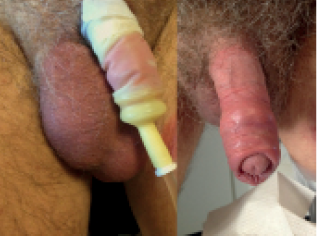
Fig. 1. Erythematous and oedematous eruption on the penis
(Source: N. Milanesi (IT)/John Wiley & Sons)
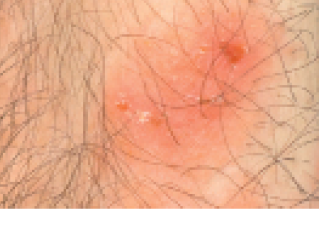
Fig. 2. Allergic contact urticaria caused by latex
(Source: Healthline.com)
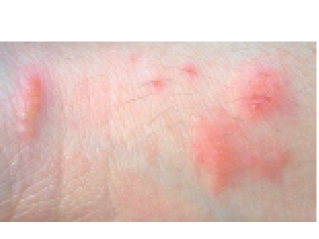
Fig. 3. Contact dermatitis
(Source: Healthline.com)
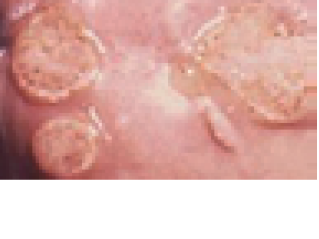
Fig. 4. Granuloma inguinale
(Source: Healthline.com)
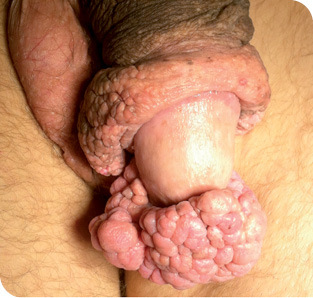
Fig. 5. Fibroepithal polyp
(Source: H. Yan (CA))
5.4 Compressive complications
The lack of pressure and/or pain sensation in most patients with spinal cord injury results in an increased risk of compressive complications. Compression by MECs may cause penetrating or non-penetrating lesions. If the patient is not assessed properly and the size of the MEC is wrong, strangulation of the penis may occur. There are reports of patients who have developed discolouration and subsequent gangrenous changes of the penis because of compression from MECs. [32-35] Gangrene is a type of necrosis caused by a critically insufficient blood supply and is seen rarely in patients using a MEC.
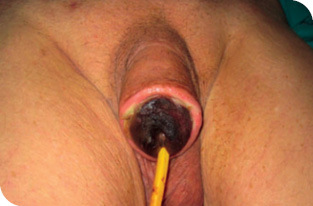
Fig. 6. Gangrene due to insufficient blood supply
(Source: H Özkan (TR)/John Wiley & Sons)
Table 3. Complications from studies (2000-2015)
| Complications from studies | |
| UTI | 44% (LE 1b) [25,26] |
| Irritative complications | Case reports [27,36-41] |
| Allergic complications | Case report [31] |
| Compressive complications | Case reports [32-35] |
| Recommendations | LE | GR |
| Describe protocols for proper use of MECs | 4 | C |
| Observe/inspect the penile skin carefully when changing the MEC | 4 | A* |
| Ask/check the patient for latex and other allergies | 4 | A* |
| Refer the patient to patch testing if oedema or dermatitis of the penile glans or shaft is observed [30,31] | 4 | C |
An A* grade recommendation is a strong recommendation despite level 4 evidence.